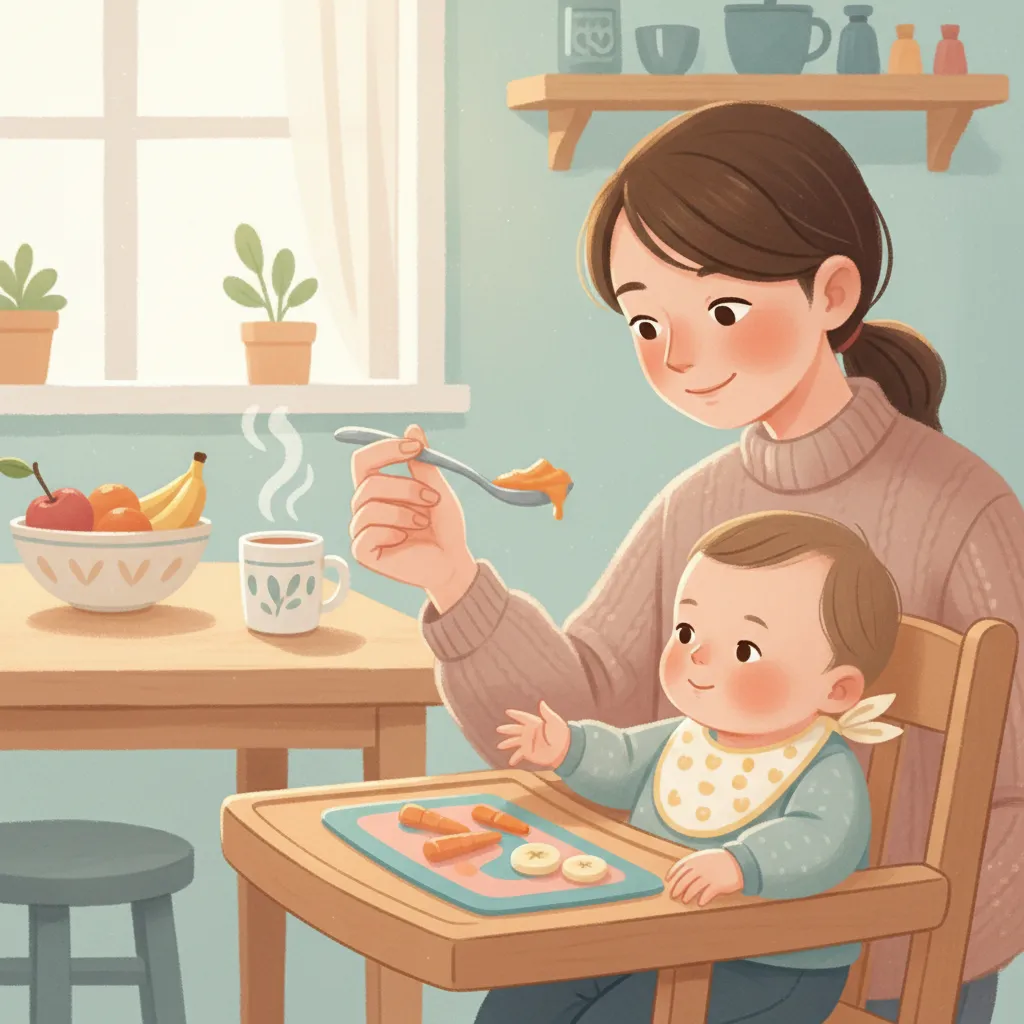

Many babies start showing readiness for solids sometime between 4 and 6 months, but age by itself is not enough. What matters most is whether your baby has the developmental skills to eat safely and begin learning how to handle food. Starting before your baby is ready can make feeding harder and may increase choking risk. Waiting until your baby shows clear readiness signs can make the first meals feel calmer and more successful for both of you.
There is no single test that proves a baby is ready. Instead, look for a cluster of signs. Your baby should be able to hold their head steady, sit with support, and show interest in food. They should also have less of the tongue-thrust reflex, which is the natural tendency to push food back out of the mouth.
What readiness really means
Readiness for solids is about coordination, not just curiosity. Your baby needs enough head and neck control to keep food in the mouth and move it safely toward the throat. They also need to be able to sit upright with support so swallowing is easier and the airway is better protected.
These skills usually emerge over time in the second half of the first year. Some babies are ready a little earlier, and some a little later. Your baby’s individual development matters more than the calendar.
A helpful way to think about readiness is: can your baby stay upright, pay attention, and swallow safely? If not, it may be too soon for solids.
Head control and sitting with support
Strong head control is one of the most important readiness signs. When your baby can hold the head steady, they are better able to coordinate swallowing and breathing. This is why many feeding guidelines say to wait until the baby can sit with support and maintain good head control.
You do not need your baby to sit completely independently before starting solids, but they should be able to sit upright in a highchair or feeding seat with minimal slumping. A slouched position makes it harder to swallow safely.
Do not start solids if your baby still has poor head control or cannot stay upright with support. These are important safety signs, not just developmental preferences.
The tongue-thrust reflex is fading
Young babies naturally push objects out of the mouth with the tongue. This tongue-thrust reflex helps protect them early in life, but it can also make early spoon feeding frustrating because food may keep coming back out.
As babies mature, this reflex becomes less strong. When it has faded enough, your baby can more easily move purees or soft foods from the front of the mouth to the back to swallow. A little spitting out is normal at first, but constant pushing out of food can be a sign that it is still too early.
A small amount of gagging, coughing, or spitting can happen as babies learn. That is different from choking. Keep the baby upright and offer tiny amounts as they practice.
Interest in food is helpful, but not enough by itself
Many parents notice the first sign of readiness when a baby watches them eat closely, reaches for food, or opens the mouth when food is nearby. This interest is a good sign, but it should be paired with the physical skills above.
Babies are naturally curious about what you are doing at the table. A baby who grabs for a spoon at 4 months may be curious without being ready to swallow safely. On the other hand, a baby who is quiet about food may still be ready if the body skills are there.
Signs your baby may not be ready yet
If your baby shows only one readiness sign, that is usually not enough. For example, curiosity alone does not mean the muscles and reflexes are ready for swallowing. It is common to wait a bit longer and try again in a week or two.
If your baby was born early, has a neurological condition, or has a history of feeding or swallowing problems, ask your pediatrician before starting solids. Some babies need individual guidance.
What readiness does not mean
Readiness does not mean your baby will eat large amounts right away. Early solid foods are for practice, learning, and exposure. Breast milk or formula still provides most of your baby’s nutrition in the first year.
It also does not mean your baby has to love solids immediately. Some babies need many tries before they accept new textures or flavors. Small tastes, repeated exposure, and a calm routine are more important than finishing a portion.
If your baby is ready, start with a time of day when they are alert and not overly hungry. A calm, upright baby usually handles first foods better than a tired or very fussy one.
How to prepare for the first meals
When the readiness signs are there, begin with small amounts of soft, age-appropriate food. Offer one food at a time at first if that feels easier, and keep the experience relaxed. Your baby may lick, spit out, smear, or taste only a little. That is part of learning.
Choose a safe feeding setup: a stable highchair or supportive seat, your baby sitting upright, and close adult supervision. Never feed a baby in a car seat, swing, or while lying down.
When to call your pediatrician
Call your pediatrician if you are unsure whether your baby is ready, especially if your baby was born early or has a medical condition that could affect feeding. You can also check in if your baby seems ready but is struggling once you start.
If something does not feel right, trust your instincts and ask. Early feeding is a learning process, and it is okay to wait until your baby is clearly ready.