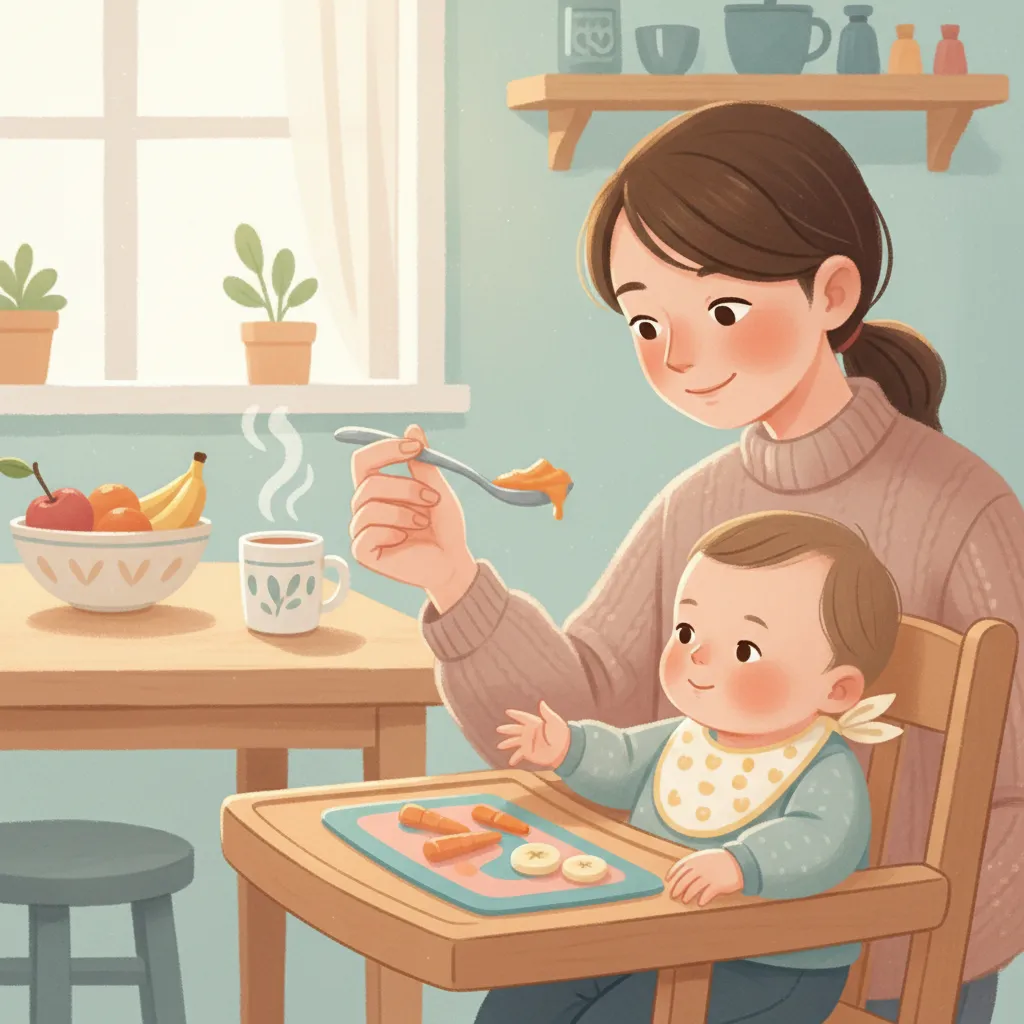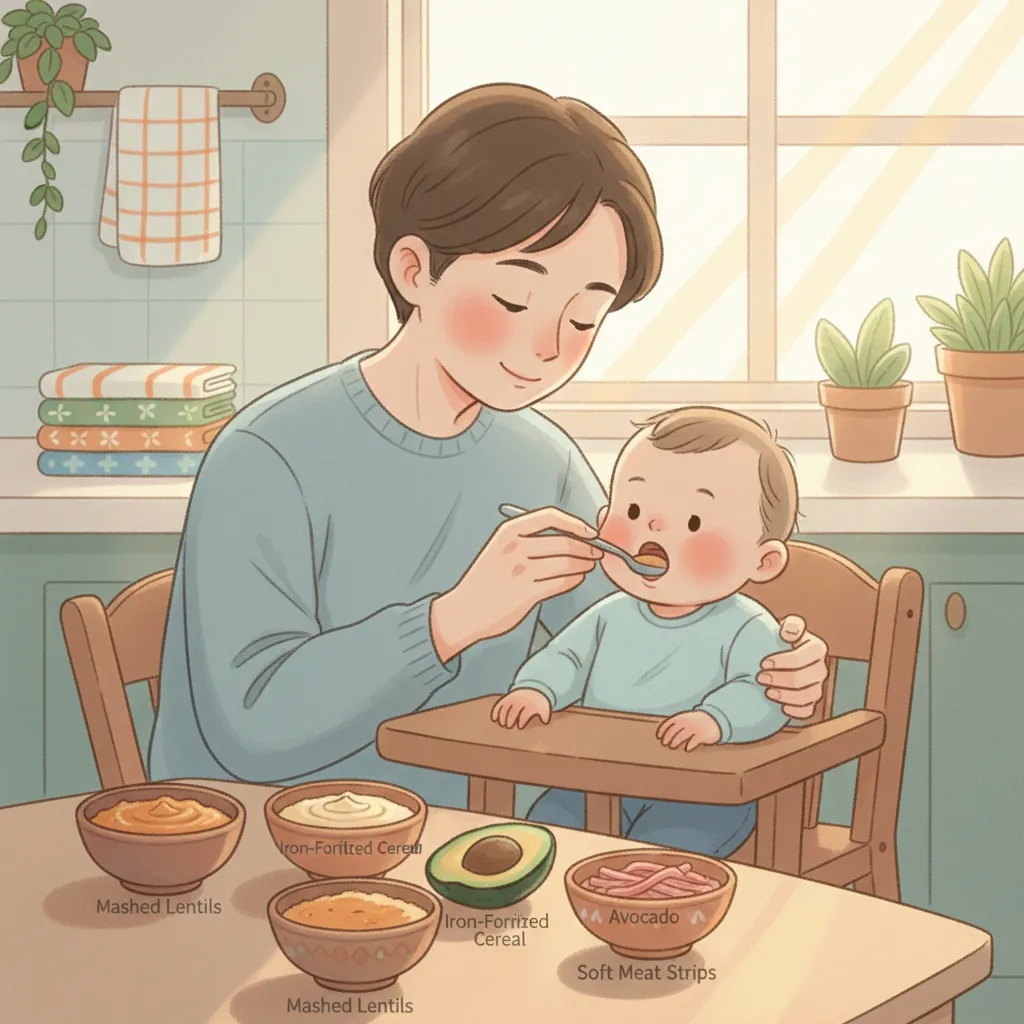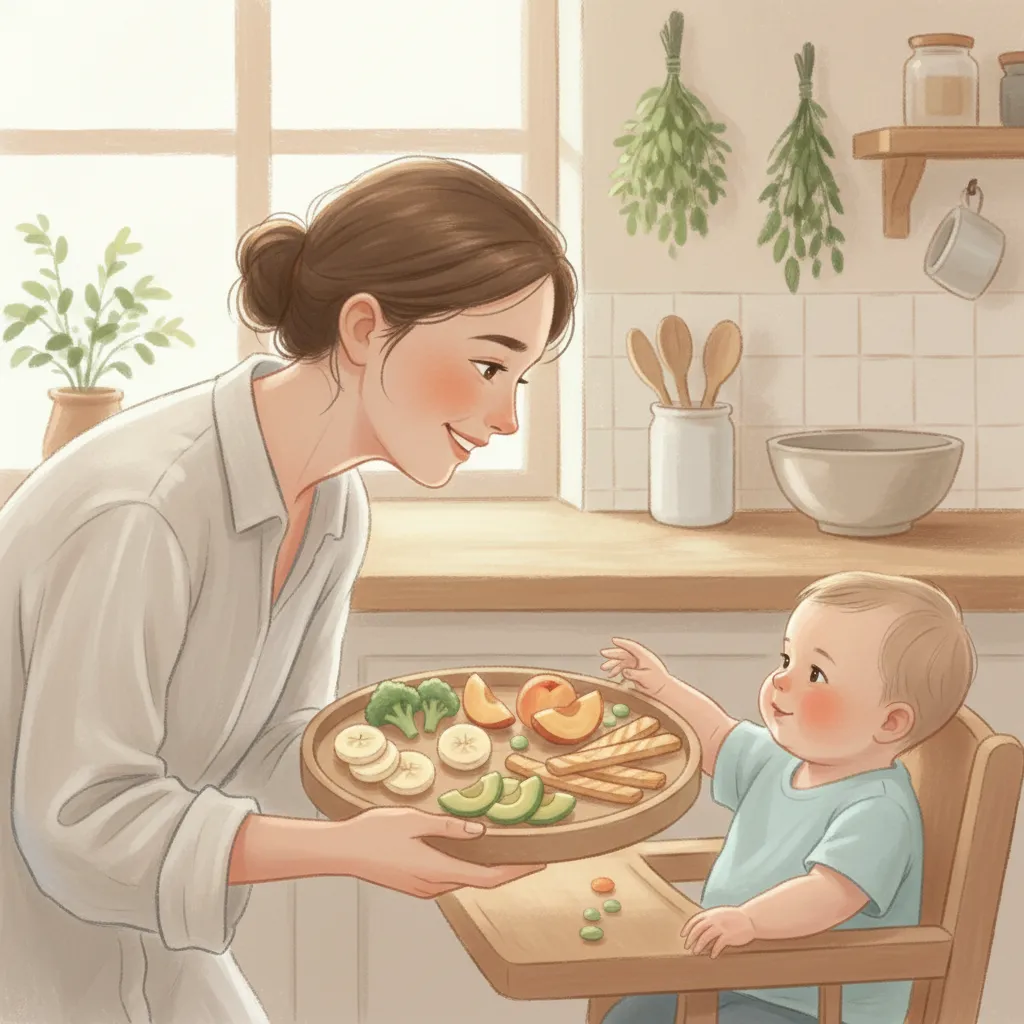
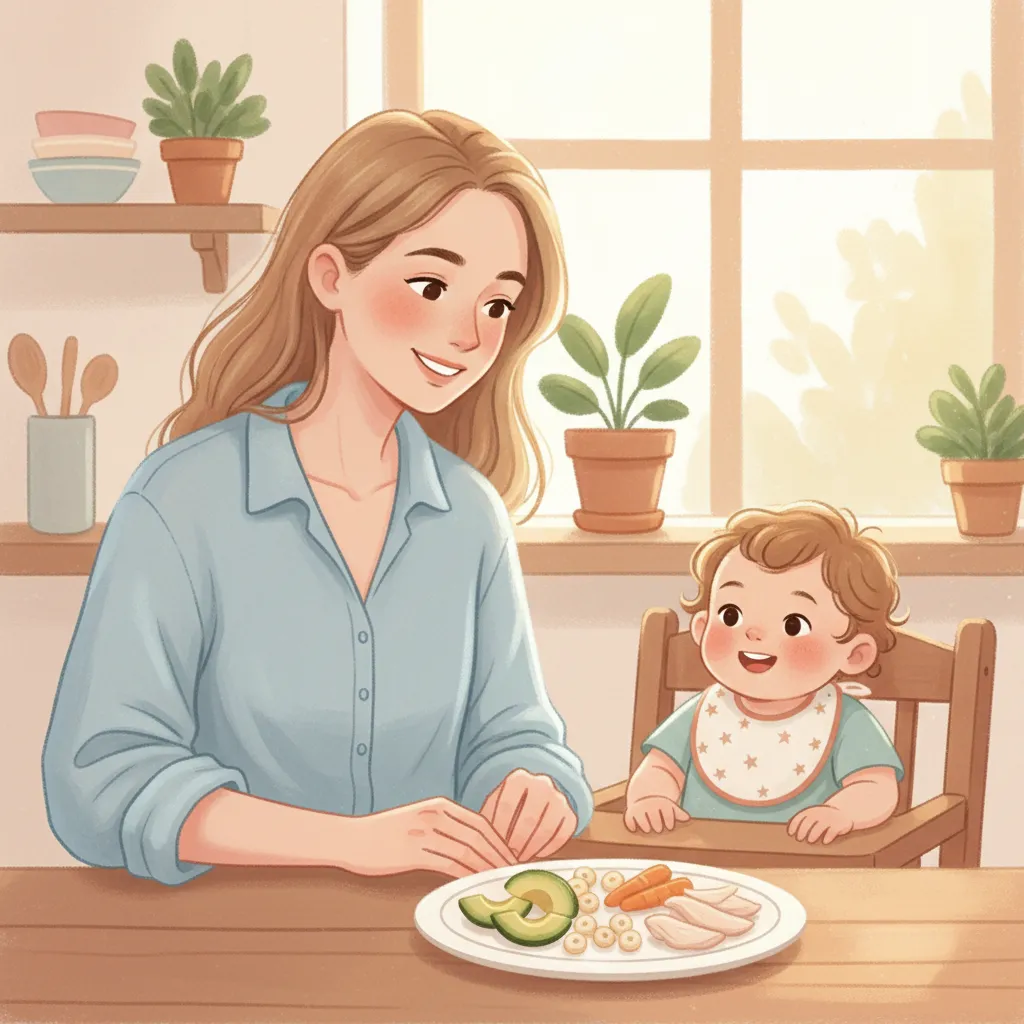
By 9 to 12 months, many babies are ready to move beyond just tasting foods and begin eating more structured meals. This is a good time to offer three meals a day, with snacks if needed, and to include a range of food groups across the day. The goal is not perfect portion sizes or perfectly balanced plates at every meal. It is steady practice with eating, chewing, self-feeding, and joining family mealtimes.
At this age, your baby is still learning how to manage textures, bring food to the mouth, and decide how much to eat. Breast milk or infant formula remains an important source of nutrition through the first year, but solid foods should now play a growing role. Offering a mix of iron-rich foods, fruits, vegetables, grains, and protein foods helps support growth and development while building healthy eating habits.
What “balanced” means at this age
A balanced meal for a 9- to 12-month-old is simpler than an adult meal. It usually includes at least one food from more than one group, served in safe textures and small pieces. You do not need to measure every bite or make every meal look the same. Think in terms of variety over the course of a day or two.
If one meal is mostly fruit and another is mostly bread, that is okay. Balance can happen across the day. Your main job is to keep offering a range of foods, especially iron-rich options.
How many meals and snacks to offer
Many babies this age do well with three meals each day, plus one or two snacks if they seem hungry between meals. Some babies still take only a few bites at some meals, especially during growth changes, teething, or illness. Others may eat more at certain times of day. Follow your baby’s cues and keep the rhythm consistent.
Avoid letting your baby “snack all day” on milk, juice, crackers, or pouches. Frequent grazing can reduce appetite for meals and make it harder for babies to learn hunger and fullness cues.
Food groups to include across the day
You do not need to include every food group at every meal. A useful approach is to make sure that over the course of the day, your baby has repeated chances to eat iron-rich foods, produce, grains, and protein foods. Repetition matters. A baby may need to see, touch, and taste a food many times before accepting it.
A simple meal could be scrambled egg with soft toast and fruit, or lentils with rice and soft-cooked vegetables. Simple is fine. You do not need separate “baby food” every time.
Finger foods and self-feeding
Many 9- to 12-month-olds are ready for more finger foods and self-feeding practice. This helps develop hand-eye coordination, chewing, and independence. It also lets your baby explore food without pressure.
Food texture is a major safety issue. Avoid hard, round, sticky, or chewy foods that can block the airway, such as whole grapes, nuts, popcorn, hard raw vegetables, chunks of apple, sausage coins, and spoonfuls of thick nut butter.
Joining family meals
Family meals are one of the best ways to help babies learn to eat. Sitting together shows your baby what eating looks like, gives them chances to copy you, and can make mealtimes calmer. Your baby does not need a separate menu if the family meal can be adapted safely.
A baby who watches you eat is learning important skills. Talking, smiling, and eating the same foods together can make mealtimes more positive than focusing on how much your baby eats.
Sample meal ideas
These examples are only ideas. The best meals are the ones your baby can safely manage and that fit your family’s foods and routine. Think soft, simple, and varied.
Drinks, milk, and what to limit
Breast milk or infant formula still matters during the first year, even as solids increase. Small amounts of water can be offered with meals once solids are established, especially to help your baby learn cup drinking. Juice is usually not needed, and sugary drinks are not appropriate for babies.
What to do if your baby eats very little
It is common for intake to vary from meal to meal. Teething, fatigue, constipation, illness, and distractions can all affect appetite. A baby may eat well one day and barely touch food the next. The overall pattern matters more than any one meal.
It often takes repeated, calm exposure before a baby accepts a new food. Offer again later without pressure. Your baby is learning, even when they only lick, smell, or touch the food.
When to call your pediatrician
Reach out to your pediatrician if you are worried that your baby is not gaining weight, seems unusually tired, has trouble chewing or swallowing, coughs frequently during meals, vomits often, has persistent constipation or diarrhea, or refuses most foods over time. Also call if mealtimes are very stressful for you, or if you need help deciding how to balance milk and solids.