
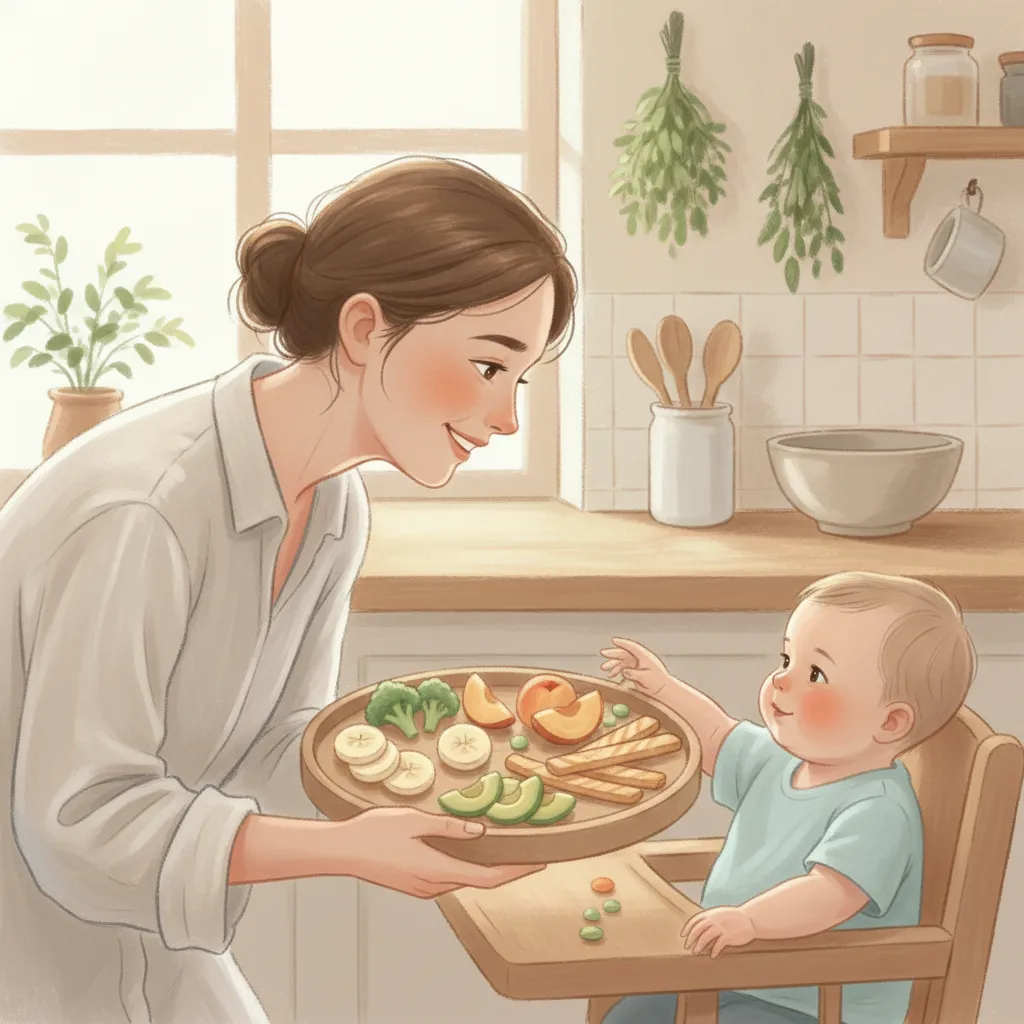
Baby-led weaning (BLW) is a way of introducing solid foods that lets your baby pick up and feed themselves from the start. Instead of spoon-feeding purées as the main approach, you offer soft, appropriately cut foods your baby can grasp and explore at their own pace. Many families like BLW because it can fit naturally with family meals and encourages self-feeding skills.
BLW is not a race to replace milk feeds. For most babies, breast milk or formula remains their main source of nutrition through the first year. Solids are added gradually as practice, exposure, and appetite grow. The goal is not how much your baby eats in the first weeks, but helping them learn to chew, move food around the mouth, and enjoy a variety of tastes and textures.
This guide explains what BLW is, which foods are suitable, how to prepare food safely, and how BLW compares with purées. It also highlights the difference between gagging and choking, because that distinction matters for safety and for your confidence at mealtimes.
What baby-led weaning means
In a baby-led approach, your baby sits upright and feeds themselves from the foods you offer. You decide what foods are served, when they are offered, and the environment. Your baby decides whether to eat, how much to eat, and which pieces to pick up. That idea of shared responsibility is a central feature of responsive feeding.
A good BLW meal is not measured by teaspoons eaten. It is measured by safe exposure, practice, and repeated opportunities to learn.
When your baby is ready
Most babies are ready for solids around 6 months, when they can sit upright with good head and neck control and show interest in food. Readiness matters more than age alone. If your baby cannot sit safely, still has a strong tongue-thrust reflex, or cannot bring food toward their mouth, it may be better to wait and try again later.
Do not start solids before about 6 months unless your pediatrician has advised it. Starting too early can be harder for your baby to manage and may not meet their developmental needs.
Which foods work well for BLW
At first, choose foods that are soft enough to mash easily between your fingers and shaped so your baby can hold them. Foods should be long enough to grasp, or naturally form a soft lump that can be picked up. A useful rule is: if it is hard, round, sticky, or brittle, it is not a good first BLW food unless it is prepared in a safer way.
Many families begin with foods rich in iron and energy, because babies’ iron needs increase around 6 months. Soft meat, beans, lentils, egg, fish, and iron-fortified cereals can all fit into BLW when served in a form your baby can manage.
Serve a mix of food groups over time, even if your baby only licks or squishes the food at first. Repeated exposure helps them learn without pressure.
How to prepare food safely
Safe preparation is the heart of BLW. The same food can be suitable or unsafe depending on its size, shape, and texture. Your aim is to make food easy to gum and hard to obstruct the airway. Softness matters more than whether a food is branded as a “baby food.”
Never leave your baby unattended while eating. Always supervise meals, keep your baby seated upright, and avoid feeding in a car seat, stroller, or while they are moving around.
Avoid common choking hazards such as whole grapes, whole nuts, popcorn, chunks of raw apple or carrot, sausages cut into rounds, sticky spoonfuls of nut butter, and hard candy. These foods need safer preparation or should be avoided.
Gagging is common; choking is different
Many babies gag when learning to eat. Gagging is a protective reflex that helps move food forward or spit it out, and it can look dramatic. Your baby may cough, splutter, or make loud noises. Choking is different: the airway is blocked or partly blocked, and your baby may be silent, unable to cough effectively, or struggling to breathe.
Take an infant first-aid and choking course if you can. Feeling prepared often makes mealtimes calmer for parents and caregivers.
BLW and purées: how they compare
You do not have to choose one perfect method forever. Some families use BLW only, some use purées only, and many use a combination. The evidence suggests that responsive, developmentally appropriate feeding matters more than a strict method label. Babies can learn to accept textures through self-feeding, spoon-feeding, or both, as long as meals are calm and age-appropriate.
Research on baby-led approaches suggests they are feasible for many families, but parents still need support with food preparation, choking prevention, and making sure iron-rich foods are offered regularly. There is no need to be rigid if your baby does better with a mix of textures and methods.
Milk feeds, nutrients, and iron
During the first year, breast milk or formula remains important even after solids begin. Early solid foods are about learning and gradually increasing intake, not about replacing milk right away. Iron is especially important because babies’ stores begin to fall around 6 months, and iron-rich foods should be part of the plan from the start.
If your baby eats very little at meals, do not worry at first. Keep offering iron-rich foods again and again in safe forms, because acceptance usually grows with repeated exposure.
A calm, realistic approach for families
BLW works best when it fits your family rather than when it becomes a test of parenting. Some babies eat enthusiastically; others need many days of tasting and playing before they swallow much. Both patterns can be normal. What matters is steady growth, safe eating, and a relaxed environment.
In baby-led weaning, your job is to offer safe food and support. Your baby’s job is to decide what to explore and how much to eat.
When to call your pediatrician
Contact your pediatrician if your baby seems unable to handle textures, has repeated coughing or choking with meals, has poor weight gain, refuses most foods after several weeks of gentle offering, or you are worried about allergies, reflux, constipation, or feeding discomfort. You should also ask for advice if your baby has developmental differences, a history of prematurity, or any medical condition that could affect feeding.