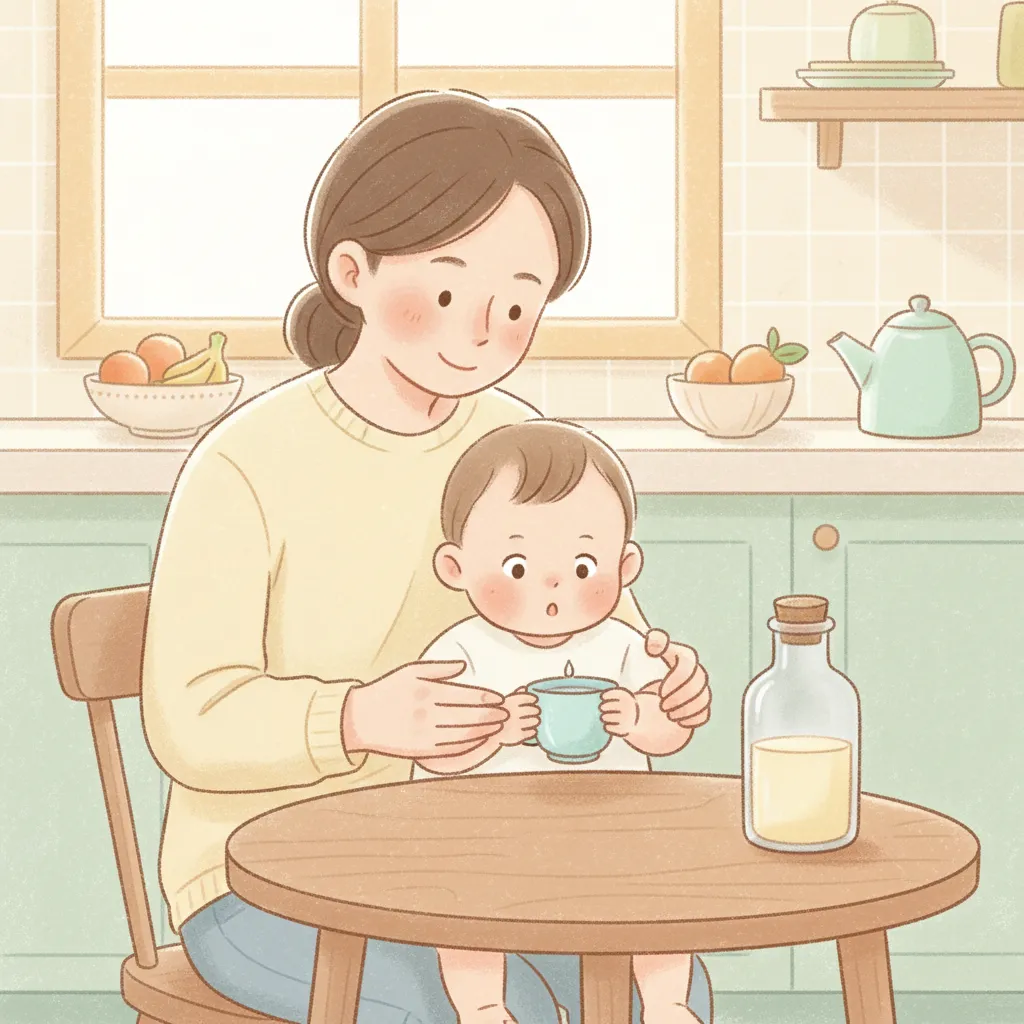

For most babies, breast milk or infant formula provides all the fluid they need during the first 6 months. In that early stage, extra water is usually not needed and can, in some situations, be harmful if it replaces enough breast milk or formula. Once solids begin, small sips of water can help your baby learn to drink from a cup and can support mealtime routines.
What your baby drinks changes over the first year. The big goals are simple: keep milk feeds as the main source of nutrition in the first months, add water in small amounts when solids begin, avoid juice before 12 months, and wait to offer cow’s milk as a main drink until after the first birthday.
Birth to 6 months: breast milk or formula is enough
During the first 6 months, healthy babies usually do not need extra water. Breast milk and infant formula already contain the fluid your baby needs, even in warm weather. If you are breastfeeding, feeding on demand usually helps your baby stay well hydrated.
If you are worried that your baby is not getting enough to drink, look first at wet diapers, feeding behavior, and weight gain rather than assuming they need water. A pediatrician can help you decide whether feeding concerns are due to intake, illness, or something else.
When to offer water: usually after solids begin, around 6 months
Once your baby starts eating solid foods, you can begin offering small amounts of water with meals. The goal at this stage is not to replace milk feeds. Instead, water helps your baby practice sipping and keeps mealtimes comfortable, especially as solids become a bigger part of the day.
Do not force your baby to finish water, and do not give large volumes of water in place of breast milk or formula. Too much water can lower your baby’s intake of needed calories and nutrients, and in young infants it can be dangerous.
How much water is enough in the 6–12 month period?
There is no exact water target for every baby in the second half of the first year. A small amount with meals is usually enough for practice and comfort. Your baby’s milk feeds should still make up most of their fluid intake until age 12 months.
A good rule: offer water with meals, not as a separate “drink break” to replace milk feeds. For many babies, a few sips at each meal is enough.
Juice: best avoided before 12 months
Fruit juice is not recommended for babies under 12 months. Juice is not necessary for hydration, and it can crowd out breast milk, formula, or nutritious foods. Whole fruit is a better choice once your baby is developmentally ready for solids because it gives fiber and helps build healthy eating habits.
Cow’s milk: not as a main drink before 12 months
Cow’s milk should not be used as a main drink before 12 months of age. Before that time, breast milk or infant formula is the right milk for your baby’s needs. Cow’s milk does not have the right balance of nutrients for young infants and can contribute to iron problems if it replaces infant milk too early.
If your baby is under 12 months, do not make cow’s milk the main drink. If you are considering switching early because of cost, constipation, or formula concerns, talk with your pediatrician first.
What to use in bottles, cups, and bedtime routines
Water should not become a substitute for a feeding routine in the early months. If your baby still takes bottles, keep using breast milk or formula in the bottle until your pediatrician says it is time to transition. As solids increase, practice water in a cup so your baby learns a different drinking skill from bottle feeding.
If your baby is learning to use a cup, expect spills. Short practice sessions are more helpful than trying to get them to drink a large amount.
Situations where hydration needs a closer look
Some babies need individualized advice about fluids. This is especially true if your baby was born prematurely, has a medical condition, is vomiting, has diarrhea, or is not gaining weight well. Babies can also need different feeding guidance in hot weather, but extra water is still not a routine answer in the first 6 months.
When to call your pediatrician
Call your pediatrician if your baby is under 6 months and you are thinking about giving water, if your baby under 12 months is drinking cow’s milk as a main beverage, or if anyone recommends juice for a baby younger than 12 months. Also call if your baby has signs of dehydration, feeding refusal, vomiting, diarrhea, poor weight gain, or a medical condition that may change fluid needs.